
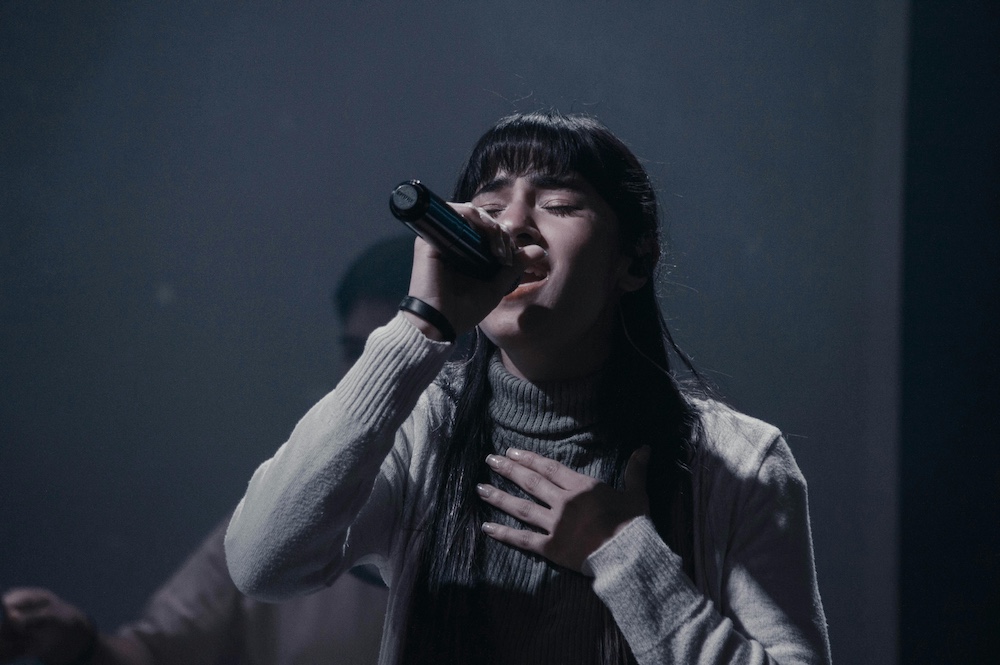
Sometimes people come to me for ‘singing lessons’.
They want technical voice help and I know how to teach technique! In fact I’ve done it for more than two decades.
But there is another kind of conversation I find myself having often with artists and singers.
Usually it begins with something like:
“I feel like I’ve adapted so much to what other people are telling me to do that I’ve completely squashed my own voice.”
That sentence is not really about scales or breath control.
It is about expression.
Identity.
Self-trust.
Authorship.
I think a lot of singers — especially sensitive, thoughtful, artistic people — spend years learning how to “do it correctly.” They learn technique, style, genre conventions, performance etiquette, musicality. They become highly skilled at reproducing sounds that already exist.
But somewhere in that process, they lose themselves, they lose contact with their instinct.
They stop asking:
“What do I actually like?”
And start asking:
“What is right?”
“What sounds professional?”
“What will people approve of?”
“What would my teacher say?”
“What sounds tasteful?”
Eventually expression starts to feel paralysed.
Because artistry cannot fully emerge through constant self-correction.
I often work with people who have beautiful voices but are deeply disconnected from their own artistic instincts. They can sing well. Sometimes very well. But underneath it there is tension. Monitoring. Fear. A constant internal editing process happening in real time.
They are trying to perform well instead of reveal something true.
And these are not lazy people. Quite the opposite. Usually they are intelligent, emotionally perceptive people with good taste. Often they love artists like great artists whose work feels raw, human, emotionally alive.
But then they approach their own voice as if it needs permission to exist.
This is one of the reasons I work the way I do.
Of course technique matters. Technique gives us access, freedom, stamina, colour, range.
But technique is not artistry.
Technique is a tool.
Expression is the centre.
Sometimes I think traditional vocal training unintentionally becomes very technical. People become highly trained in reproducing approved sounds before they have developed any real relationship with their own artistic instincts.
And then later — often years later — something starts pressing against the walls.
Usually quietly at first.
A feeling of: “This still isn’t me.”
That is where the real work begins.
Not in becoming someone else.
Not in manufacturing a persona.
But in learning to hear yourself again.
Learning what moves you.
Learning what you are drawn to.
Learning what kind of sounds, textures, lyrics and emotions feel honest to you.
I often say to clients:
“You resonate with what you are”
I mean that deeply.
The music you obsess over.
The voice that cracks you open.
The film scene you cannot stop thinking about.
The lyric that follows you around for years.
None of it is random.
It is all information.
Artistic identity is not something you invent out of thin air. Very often it is something you uncover by paying attention to what has been calling to you all along.
And yes, there can be grief in this process too.
A grief around how long they have spent monitoring themselves instead of inhabiting themselves.
A grief around lost time.
A grief around working so hard to “be perfect”.
A grief around the loss of the thought that there was a perfect thing to aim for, when the perfect thing was always there, all along.
But despite that, I find this process profoundly beautiful.
Because when people stop trying to “get it right” all the time, something extraordinary often starts happening.
The voice becomes alive again.
Not perfect.
Not polished into oblivion.
Alive.
And in a world increasingly full of replicated aesthetics, algorithmic sameness and emotionally flattened performance, I think aliveness matters.
I think humanity matters.
I think truth matters.


