
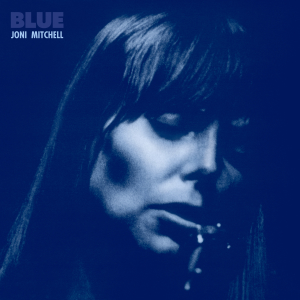
As a vocal coach and artist development mentor, I often turn to artists whose work reveals the deeper possibilities of expressive singing. Few artists embody emotional honesty, vocal freedom, and artistic courage as fully as Joni Mitchell. Her album Blue remains one of the most powerful examples of how voice, vulnerability, and songwriting come together to create work that lasts.
This isn’t a standard album review.
It’s an exploration of what singers, songwriters, and developing artists can learn from Blue—about expression, artistry, and finding your own authentic voice.
THE JOURNEY BEHIND BLUE
In search of new inspiration, Joni travelled to the Matala beach cave commune in Crete, Greece. The bohemian lifestyle, community, and simplicity created a space for introspection and raw creativity. Later, in Parisian cafés and studios, she refined the poetic and melodic contours of the album.
This is an important reminder for artists:
Your voice carries your life. Your creative work deepens when you let yourself live, feel, travel, break, love, and rebuild.
JONI MITCHELL’S VOCAL STYLE: EMOTIONAL DEPTH & TECHNICAL ARTISTRY
Joni Mitchell’s singing on Blue offers a masterclass in vocal honesty. Her delivery blends instinct, emotional clarity, and technical sensitivity—without ever appearing forced. Below are the vocal qualities that define the album and offer valuable insights for expressive singers today.
Emotional Vulnerability in Singing
One of the most striking features of Blue is Joni’s vulnerability. She allows the voice to tremble, stretch, and reveal the rawness of her experience.
The title track is a perfect example: every slight waver communicates emotional truth.
Expressive voicework is rooted in this willingness:
letting the feeling lead the sound rather than the technique.
Dynamic Contrast & Timbral Variation
Although Joni doesn’t rely on contemporary mix or belt techniques, she uses an extraordinary range of tones—from breathy delicacy to rich resonance.
In All I Want, she increases both speed and dynamics on the repeated word “travelling,” pushing emotional momentum into the vocal delivery.
For singers, this shows how timbre and dynamics shape meaning just as much as pitch.
Vocal Speed and Tempo (Rubato Phrasing)
Mitchell often stretches and compresses time to highlight emotion. In All I Want, she elongates “I want to belong to the living,” giving the listener space to feel the weight of the lyric.
Rubato is a powerful expressive tool—one that helps singers move beyond rigidity and into emotional truth.
Jazz-Influenced Phrasing and Delivery
Her phrasing is subtle, improvisational, and conversational, reflecting her jazz influences. The bends, slides, and rhythmic freedom bring a sense of intimacy and spontaneity.
This is a reminder that phrasing is one of a singer’s most personal signatures.
Vocal Range and Effortless Control
Joni’s range throughout Blue spans roughly F#3 to F#5.
Her transitions between registers sound natural, responsive, and emotionally driven.
In A Case of You, the repeated “I could drink a case of you” shows her ability to blend vulnerability with soaring melodic ease.
Innovative Melodic Choices
Mitchell’s melodies rarely follow predictable patterns. They rise and fall in surprising ways, shaped by emotion rather than formula. This unpredictability mirrors the emotional complexity of her songwriting.
Storytelling Through Voice and Inflection
Joni uses her voice as a narrative device—changing tone, weight, and timing to paint emotional landscapes.
In River, her delivery of “I would teach my feet to fly” captures both longing and possibility.
Emotional Resonance
More than anything, Joni’s voice on Blue resonates because it feels lived. Her sound isn’t crafted to impress; it’s crafted to tell the truth.
This is the foundation of authentic artistic development:
the voice as a vessel for meaning, not performance.
LYRICAL ANALYSIS FOR SONGWRITERS: POETIC SOPHISTICATION IN BLUE
Joni Mitchell’s lyrics on Blue demonstrate why she is considered one of the greatest songwriters of our time. Her writing blends vivid imagery, metaphor, introspection, narrative clarity, and emotional precision.
Below are the notable lyrical techniques used throughout the album.
Imagery and Descriptive Language
Mitchell paints pictures with words, allowing listeners to visualise the exact setting and mood.
“Sitting in a park in Paris, France
Reading the news and it sure looks bad.
They won’t give peace a chance.
That was just a dream some of us had.”
These details create emotional atmosphere and social context, placing the listener inside the world she inhabited.
Metaphor and Symbolism
Her songs are full of layered symbolism.
In River, the frozen river represents escape, regret, and longing:
“It’s coming on Christmas
They’re cutting down trees…
Oh, I wish I had a river I could skate away on.”
The metaphor captures both seasonal imagery and emotional yearning.
Narrative Storytelling
Many songs unfold like short stories.
The Last Time I Saw Richard is a conversation between the narrator and a disillusioned old friend—a meditation on cynicism, hope, and transformation.
The emotional arc gives the song its power.
Truth, Introspection & Personal Reflection
Mitchell’s writing is famously introspective.
She shares her flaws, regrets, desires, and uncertainties without self-protection.
“I made my baby cry
And if I have to choose
Well, I know I’m gonna lose.” — River
“I am on a lonely road and I am travelling
Looking for the key to set me free.” — All I Want
Her honesty invites connection.
Free Verse and Non-Traditional Song Structures
Mitchell often abandons traditional songwriting forms in favour of free verse.
From Blue:
“Blue, songs are like tattoos.
You know I’ve been to sea before.
Crown and anchor me or let me sail away.”
Her fluid structures mirror emotional movement.
ACCOMPANIMENT & MUSICALITY: WHAT ARTISTS CAN LEARN
Joni’s arrangements also offer insight into artistic development.
• She wrote many songs on a three-stringed dulcimer during her travels.
• Her open guitar tunings encourage new shapes and textures.
• Her piano playing uses simple left-hand patterns with expressive chord choices.
• James Taylor contributed guitar layers that deepen the harmonic world.
These choices show the importance of sound world—crafting accompaniment that supports emotional expression.
SONG THEMES: LOVE, LOSS, FREEDOM & BECOMING
Throughout Blue, Joni explores relationships, independence, longing, and inner conflict.
Your original analyses of each song are preserved below:
All I Want
A longing for connection and joy, paired with a desire for independence.
My Old Man
A contrast between joy in togetherness and sadness in absence.
Little Green
A haunting reflection on giving up her child for adoption.
“Born with the moon in Cancer…”
Carey
A celebration of freedom, sensuality, and noticing the small details of life.
“My fingernails are filthy…”
California
Homesickness blended with travel’s beauty and its bittersweetness.
This Flight Tonight
A narrative of movement, regret, and inner conflict while travelling by plane.
River
Heartbreak, regret, and longing to escape the weight of life.
“I made my baby cry…”
A Case of You
A portrait of a lover she both adores and understands deeply, full of emotional complexity.
The Last Time I Saw Richard
A meditation on cynicism, romantic belief, and the changes life brings.
WHY BLUE STILL MATTERS FOR SINGERS
Blue remains an essential study for singers because it teaches the core principles of expressive artistry:
• vulnerability as strength
• honesty over perfection
• tone shaped by truth, not technique
• phrasing as emotional storytelling
• the voice as a reflection of the inner life
These principles are central to the work I do with singers in expressive vocal coaching and artist development.
READY TO EXPLORE YOUR OWN VOICE?
If Joni Mitchell’s Blue inspires you — the vulnerability, the phrasing, the emotional depth, the artistic bravery — I’d love to help you explore your own voice and creative identity.
Whether you want to develop:
• expressive singing
• vocal freedom
• artist identity
• songwriting
• emotional connection to your voice
…this is the work I specialise in.
If Joni’s expressive freedom inspires you and you’d like support from a vocal coach and artist development mentor — in London or online worldwide — I’d love to work with you.


