
The identity gap no one talks about — and why it holds singers back.
As a vocal coach, I’ve worked with singers and artists at every level — beginners finding their voices, performers preparing for gigs, and artists on the brink of releasing their first songs.
And over time, I’ve noticed a pattern that has nothing to do with vocal technique, talent, or discipline.
Many singers and artists who really care about music and their artistry don’t struggle because they lack skill.
They struggle because they haven’t yet embodied the identity of the artist they want to be.
This idea can feel abstract at first, but stick with me — it might explain years of hesitation, procrastination, or creative inconsistency.
The Identity Gap: When Your Goals and Your Self-Image Don’t Match
Most singers say things like:
- “I want to be a musician.”
- “I’m trying to get better.”
- “I want to release music someday.”
But notice the wording.
It places the dream somewhere out there, in the future, not attached to who they are now.
And here’s the tricky part:
We naturally act in alignment with the identity we believe we have — not the one we wish we had.
If deep down you see yourself as someone who’s trying to be an artist, your actions will reflect that:
- You wait until inspiration strikes
- You practice inconsistently
- You feel like you need permission to share your work
- You fear being judged because you don’t feel “legitimate” yet
This isn’t laziness or lack of ambition.
It’s a mismatch between who you think you are and who you’re trying to become.
How Embodied Identity Changes Everything
When singers make the shift from
“I’m trying to be a musician”
to
“I am a musician,”
their habits, choices, and confidence change — often dramatically.
It’s not about declaring yourself something you’re not.
It’s about recognising that if you make music,
you are already a musician.
It’s ok to be a musician who isn’t performing or a musician who’s learning, improving…..
What changes is the way you show up.
Musicians who truly inhabit their identity tend to:
- Create even when they don’t feel like it
- View practice as part of who they are, not a chore
- Experiment and play more
- Share their voice without waiting to be perfect
- Make space in their lives for their art
Their identity supports their actions — instead of sabotaging them.
Signs You Haven’t Fully Stepped Into Your Artist Identity Yet
If you’re reading this and thinking “ouch,” you’re in good company.
These are the most common signs I see:
- You apologise for calling yourself a singer or musician
(“Well, I kind of sing…”) - You wait for more confidence before showing up
Even though confidence actually comes from showing up. - You hesitate to share your voice publicly
Because it feels like you haven’t earned the title yet. - Your creative work depends heavily on mood
When inspiration drops, so does output. - You talk about music as a dream rather than part of your life
It stays on the edge of your identity instead of the center.
If any of these resonate, nothing is wrong with you.
It simply means your internal identity hasn’t caught up with your external goals yet.
How to Embody Your Artist Identity — Starting Now
Identity isn’t something you wait for.
It’s something you build through small, consistent behaviors.
Here are practical steps I give my students:
1. Claim the identity privately first
Tell yourself — in your own mind —
“I am a musician.”
“I am a singer.”
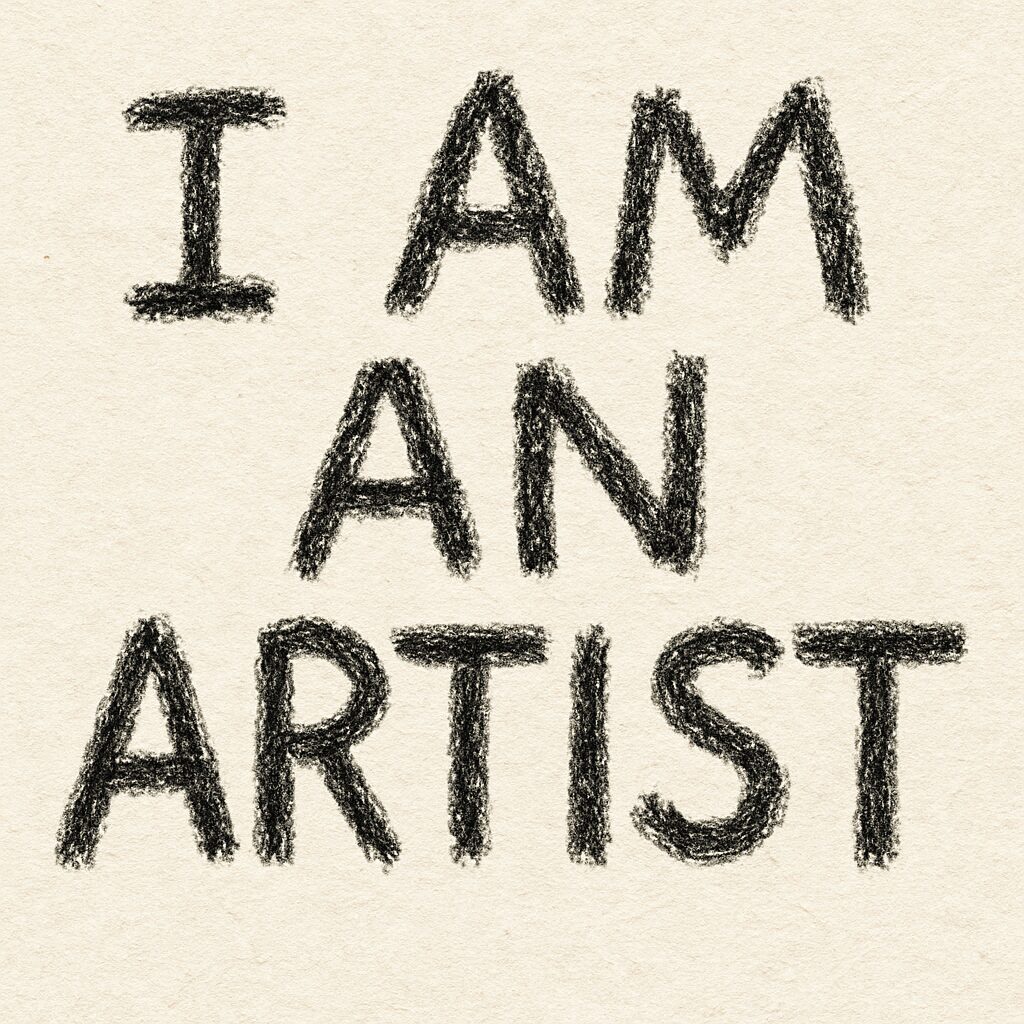
“I am an artist.”
It will feel uncomfortable at first. That’s okay.
2. Choose one habit that your future artist self would do
For example:
- 15 minutes practise a day
- 20 minutes writing a week etc.
Identity emerges from repeated action.
3. Start sharing tiny pieces of your work (with me if no one else!)
A 10-second clip.
A rough demo.
A rehearsal moment.
Not because it’s perfect — but because artists share.
4. Surround yourself with cues that reinforce your identity
This might be:
- A dedicated space for singing
- A playlist of your influences
- A folder honouring yourself as an artists; your thoughts/learnings/lyrics….
Your environment can do half the work.
5. Ask yourself one daily question:
“What would the musician version of me do today?”
And then do the smallest version of that.
Final Thoughts
Your voice, your music, your creativity — they don’t need permission to exist.
They need ownership.
The moment you stop treating music as something you’re chasing
and start treating it as something you are,
your relationship to your craft transforms.
If you’re reading this because you feel stuck or inconsistent, remember:
You don’t need to become an artist, a singer, a musician.
You already are one.
You just need to start acting like it.
You don’t have to grow alone.
Join me for vocal coaching or artist development — let’s build your identity, confidence, and artistry together.


